No. 7 (2007): Music and Identity/ies
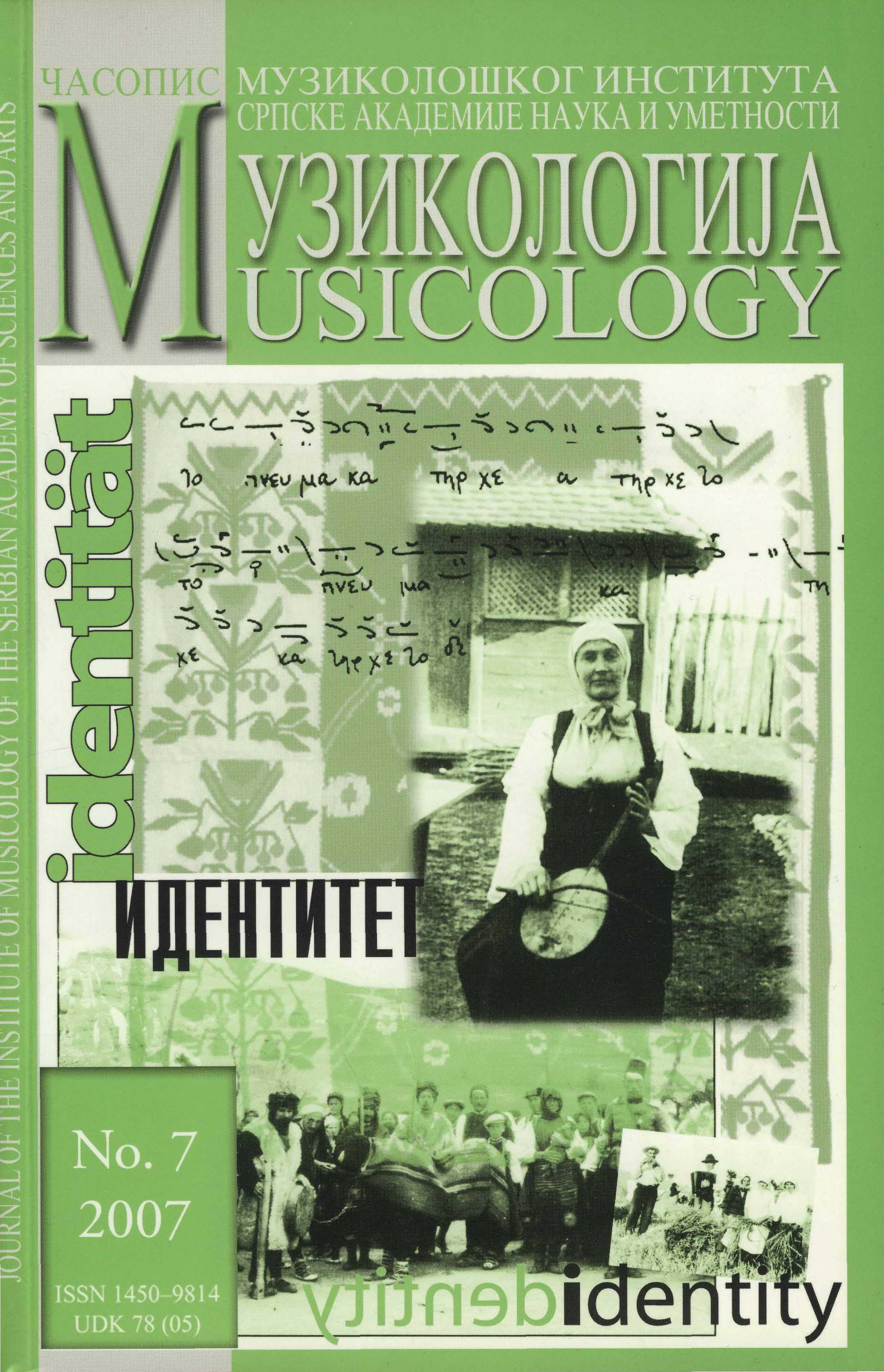
The seventh issue of the journal Musicology gathers together no fewer than 28 authors from 10 countries all over the world. On the assumption that the horizons of knowledge are widened by means of an open and flexible, international and interdisciplinary, dialogue, this new issue of Musicology continues to expand the boundaries of its titular discipline. There are studies in musicology and ethnomusicology. Articles and reviews dealing with art music sit alongside texts on folklore and on sacred traditions, old and new. And for the first time Musicology has texts on popular music, as well as on film music.
The diversity of issues covered under our central rubric arises from the breadth of interpretative space suggested by the main topic of this issue: Music and Identity/ies. The complex network of relations between music and identity stems from the semantic complexity of both notions. As a mode of communication, music, like language, is a powerful channel through which people can develop their personal and social identities. Indeed, music’s role in constructing, articulating, negotiating, and maintaining identity operates at deeper levels than in most other human activities. Not only can music express the religious, ethnic, social or political identity of an individual; at the same time it can register that individual’s affiliation to, or rejection of, particular ideological positions within a broader social and cultural group.
Published:
31.12.2007


